The Future of AI DevOps: Automating the ML Lifecycle
The machine learning lifecycle is fundamentally different from traditional software development. Models degrade over time, data distributions shift, and "deploying" a model is just the beginning of its operational life. AI DevOps — or MLOps — addresses these challenges with purpose-built automation.
The ML Lifecycle Challenge
Traditional CI/CD assumes that once code passes tests and deploys, it works correctly until the next code change. ML systems break this assumption:
- **Data drift** — The real-world data your model encounters changes over time, degrading performance even without code changes.
- **Model staleness** — A model trained on last quarter's data may not reflect current patterns.
- **Experiment tracking** — Teams run hundreds of experiments. Without proper tracking, reproducing results becomes impossible.
Key Components of AI DevOps
Continuous Training — Automated pipelines that retrain models on fresh data, triggered by schedules, data volume thresholds, or performance degradation alerts.
Model Validation Gates — Automated testing that goes beyond unit tests. Does the new model outperform the current production model on key metrics? Does it maintain fairness across demographic groups? Does it handle edge cases correctly?
Feature Stores — Centralised repositories for feature engineering logic, ensuring consistency between training and serving environments.
Model Registry — Version control for models, tracking lineage from training data through to production deployment.
Monitoring and Alerting — Real-time tracking of model performance, data quality, and system health with automated alerts when metrics breach thresholds.
Azure ML and GitHub Actions
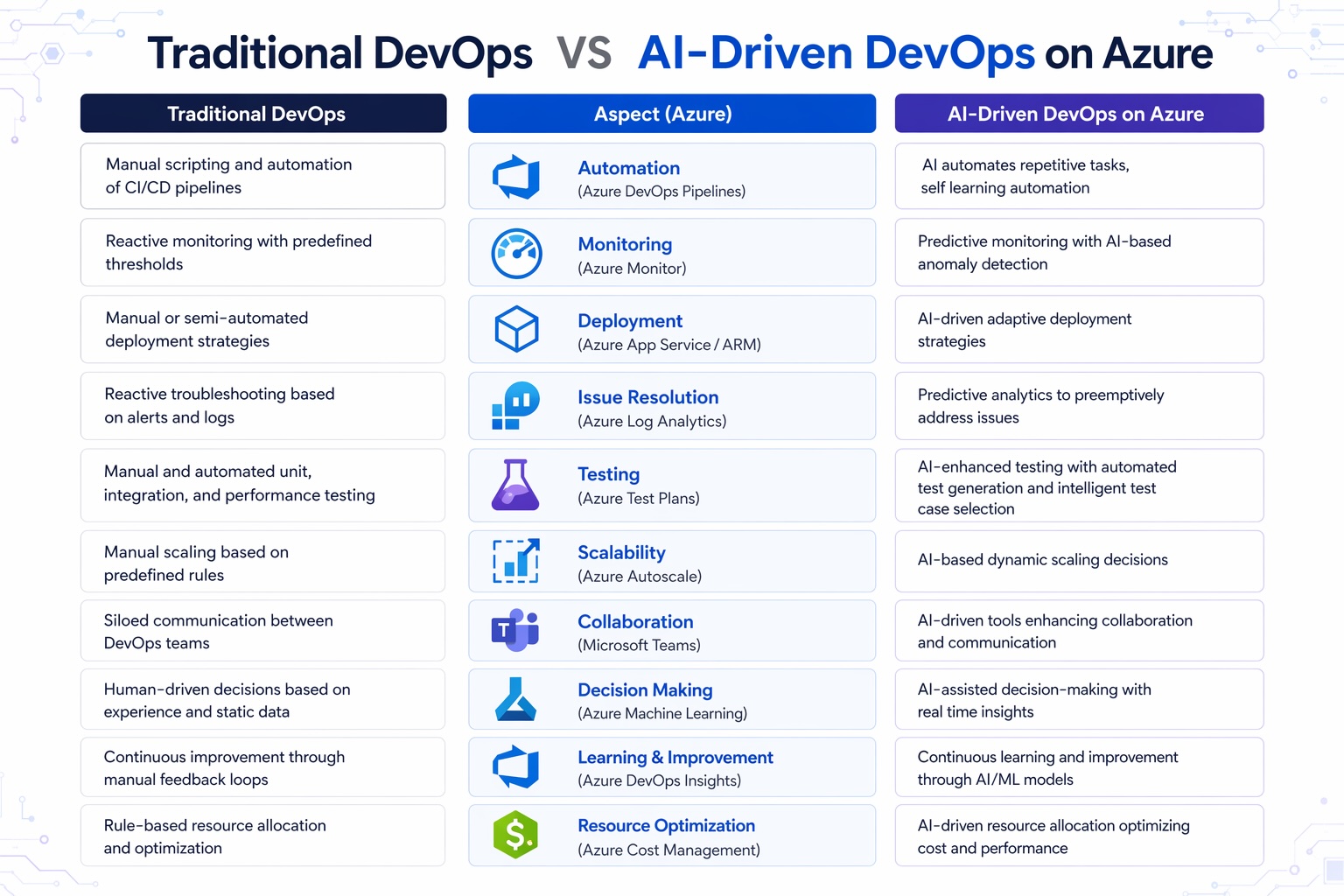
For Australian enterprises on Azure, the combination of Azure Machine Learning and GitHub Actions provides a powerful MLOps foundation. We typically set up:
- GitHub Actions for code CI (linting, unit tests, integration tests)
- Azure ML Pipelines for training orchestration
- Azure ML Endpoints for managed model serving
- Azure Monitor for production observability
Getting Started with MLOps
Don't try to automate everything at once. Start with the highest-pain manual steps — usually model deployment and monitoring — and work backwards towards training automation as your team matures.