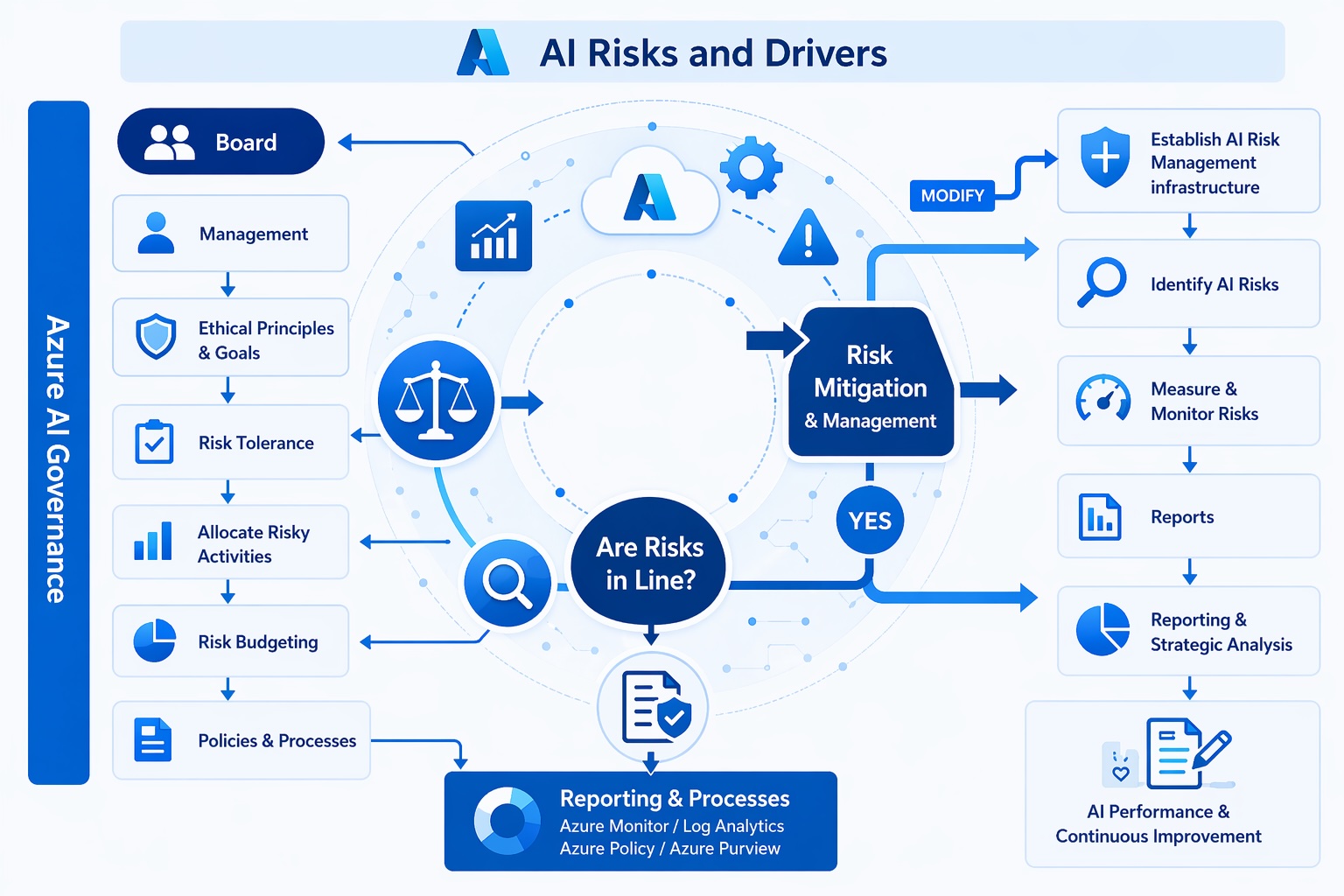
AI Governance: Building Trust Through Transparency and Control
As AI systems take on more consequential decisions, governance isn't optional — it's a business imperative. Australian organisations face unique regulatory considerations, from the AI Ethics Framework to industry-specific requirements under APRA, ASIC, and the Privacy Act.
Why Governance Matters Now
The Australian Government's voluntary AI Ethics Principles provide a framework, but regulation is tightening. Organisations that build governance into their AI systems now will be ahead when mandatory requirements arrive.
Beyond compliance, governance builds trust. Customers, employees, and board members all want assurance that AI systems are fair, transparent, and under human control.
Core Governance Pillars
Transparency — Can you explain how your AI system makes decisions? This doesn't mean exposing model weights — it means providing meaningful explanations appropriate to the audience. A customer needs to know why their application was declined. A regulator needs to understand the model's decision boundaries.
Fairness and Bias — AI systems can perpetuate or amplify existing biases in training data. Regular bias audits across demographic groups are essential, particularly for systems making decisions about people (hiring, lending, insurance).
Human Oversight — Define clear escalation paths and override mechanisms. Identify which decisions require human approval and which can be fully automated. Document these boundaries.
Data Governance — Know what data your models were trained on, where it came from, and what consent was obtained. The Australian Privacy Act's APPs apply to AI systems just as they do to traditional data processing.
Security — AI systems introduce new attack surfaces: prompt injection, data poisoning, model extraction. Include AI-specific threats in your security assessments.
Practical Implementation
Start with an AI register — a catalogue of all AI systems in your organisation, their purpose, risk level, and responsible owner. Then prioritise governance effort based on risk:
- **High risk** (decisions about people, safety-critical) — Full governance framework, regular audits, human oversight
- **Medium risk** (operational automation, content generation) — Monitoring, periodic review, clear escalation paths
- **Low risk** (internal productivity tools, analytics) — Basic documentation and monitoring
Building Your Framework
We help Australian organisations build governance frameworks that are practical, not bureaucratic. The goal is enabling responsible innovation — not creating paperwork that slows teams down without reducing risk.